
Phu Chi Fa ‘Feel the sweet air on the roof of Chiang Rai.’

Sometimes you should change your atmosphere, temporarily move to somewhere else instead of staying at the same location everyday. By doing so, you will gain a lot of new experience. And if you’re looking for a new experience, something that you have never done before in your entire life, then you may be interested in having a sightseeing at Phu Chi Fa.
You may have heard of Phu Chi Fah before, knowing that it is a beautiful place, but you may have never been to it. Therefore, let’s waste not time. Pack your luggages and book a plane ticket to Chiang Rai fast!
🌅 The Magic of the Mountain Pointing to the Sky
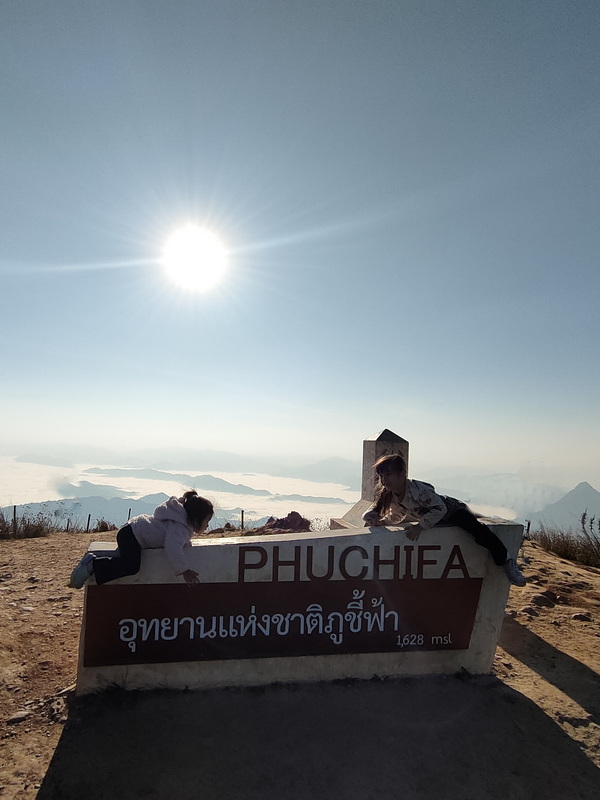
Phu Chi Fa Forest Park is a dream destination for travelers seeking the breathtaking beauty of nature. Located on the Doi Pha Mon mountain range in Thoeng District, Chiang Rai Province, it sits right on the border between Thailand and the Lao People’s Democratic Republic. The name “Phu Chi Fa” translates to “the mountain pointing to the sky,” perfectly describing the iconic, dramatic cliff that juts upward into the heavens like a giant’s finger. Visiting this destination is not just about sightseeing; it is about standing above the clouds, feeling the winter breeze, and witnessing the spectacular first light of day illuminating a vast sea of mist. It is an unforgettable experience that continues to captivate visitors year after year.
🗺️ Topography: A Natural Fortress on the Border
The geography of Phu Chi Fa is distinctly striking, forming a natural border wall between Thailand and Laos. The peak reaches an elevation of approximately 1,628 meters above sea level. The terrain consists of steep mountains and cliffs shaped by ancient geological movements, primarily featuring alternating layers of limestone and sandstone. At the summit, the landscape transforms into a narrow plain and expansive alpine grasslands leading right to the edge of the cliff. Looking down from this vantage point, visitors can see the deep, lush valleys of the Laotian forest reserves and, on clear days, the winding Mekong River far below.


⛅ Climate: A Year-Round Embrace of the Cold
Due to its high altitude, Phu Chi Fa enjoys a remarkably cool climate throughout the year, standing in stark contrast to Thailand’s lower plains. The winter season, from November to February, is the most popular time to visit, with temperatures frequently dropping to 5-10 degrees Celsius. On particularly cold nights, frost can even form on the grass. The summer months, from March to May, remain pleasantly breezy and cool, offering an escape from the heat of the cities. During the rainy season, from June to October, the mountains turn a vibrant, lush green. While the roads may be more challenging to navigate, this season rewards travelers with the thickest and most frequent seas of mist, accompanied by a serene and peaceful atmosphere.
🌳 Flora: Diverse Vegetation on the High Peaks
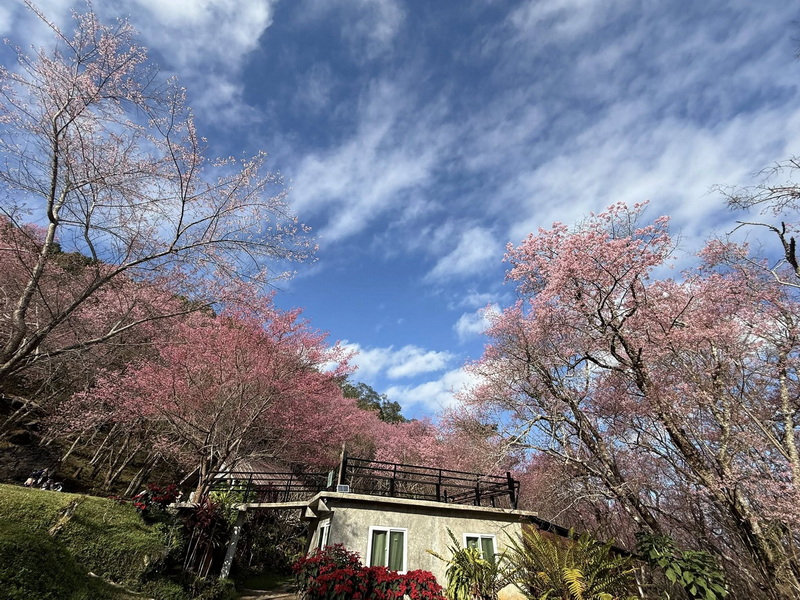
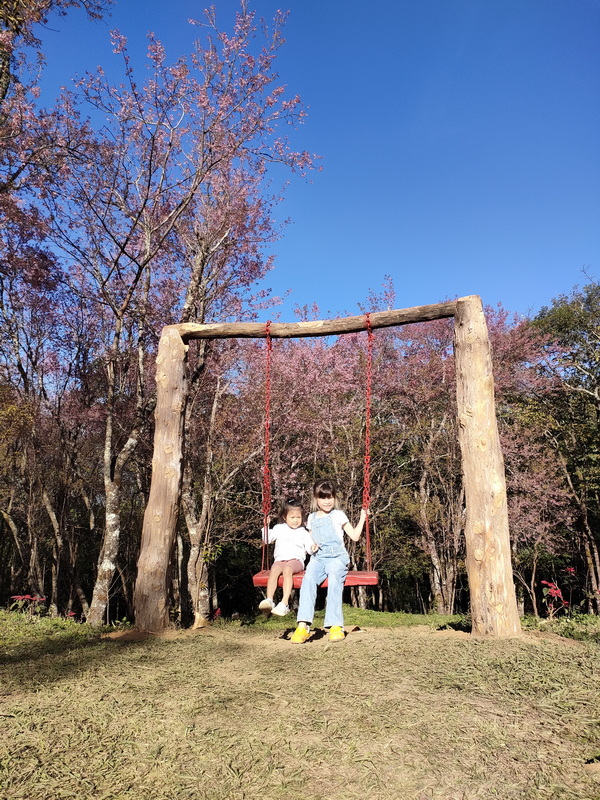
The vegetation changes dramatically with the altitude. At the base and middle levels of the mountain, deciduous dipterocarp and mixed forests dominate the landscape. Above 1,000 meters, this transitions into a rich hill evergreen forest, where large trees are heavily draped in moss and ferns due to the constant moisture. At the windy summit, large trees give way to resilient alpine grasses and low shrubs. A major botanical highlight is the blooming of the White Orchid Tree (Chongkho), which paints the forest in delicate shades of white and pink from February to March. Additionally, early winter brings the vibrant blossoming of the Wild Himalayan Cherry, often referred to as Thailand’s Sakura, which lines the routes up the mountain.
🦌 Fauna: Residents of the Tranquil Forest
While large wildlife is rare due to human activity, the rich ecosystem supports a thriving population of small animals and birds. Nature enthusiasts can spot various high-altitude bird species, such as sunbirds and bulbuls, whose songs fill the early morning air. Small mammals like squirrels and tree shrews are common sights as they navigate the branches and undergrowth. During the humid rainy season, the forest floor comes alive with mountain insects, colorful butterflies, and amphibians. This delicate balance of smaller fauna serves as a testament to the enduring vitality of the Doi Pha Mon mountain range.
📍 Must-Visit Landmarks and Viewpoints Around Phu Chi Fa


⛰️ Phu Chi Fa Peak: The Iconic Summit
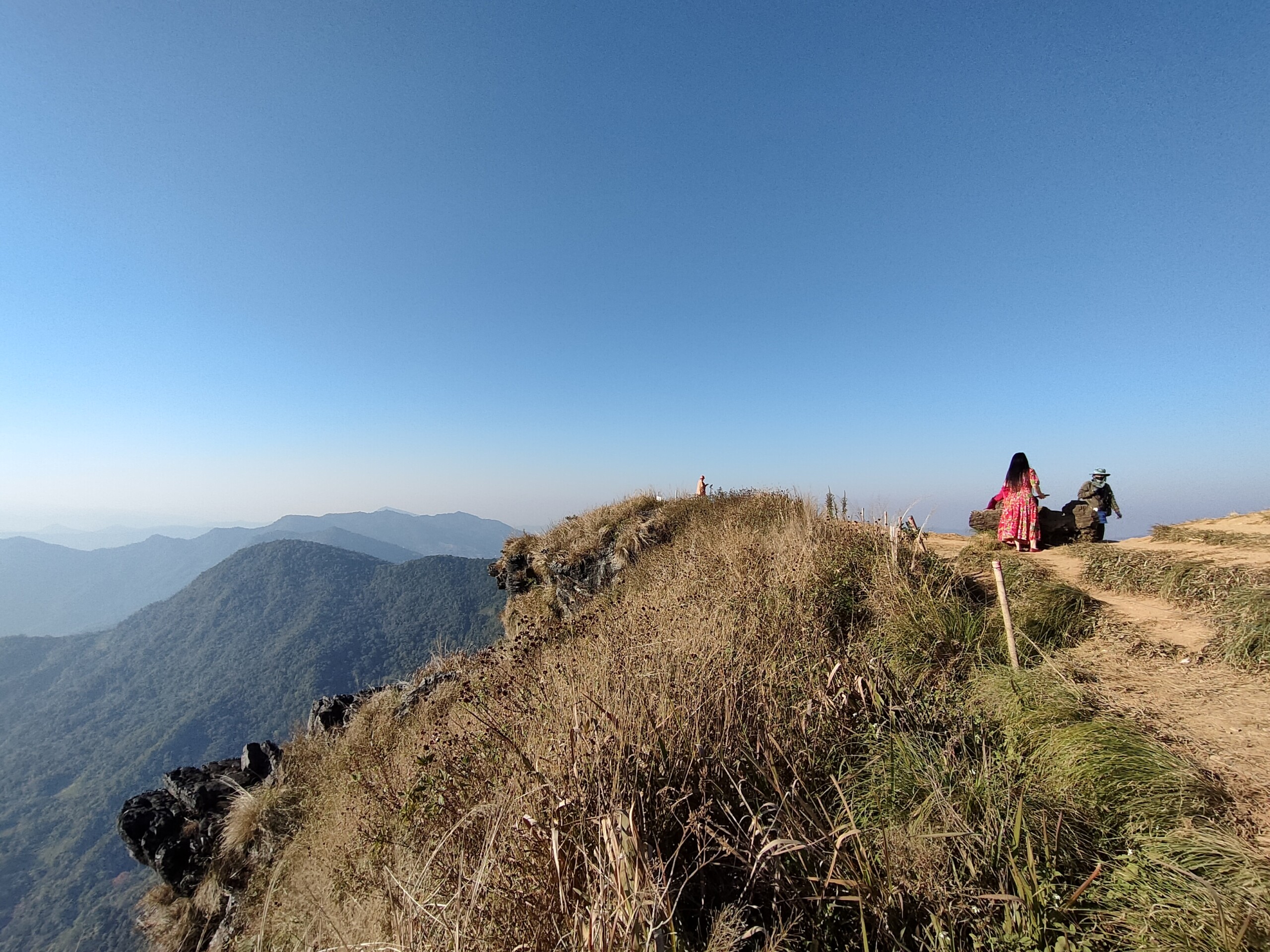
The main attraction is undoubtedly the peak of Phu Chi Fa itself, renowned for its majestic sea of mist. To witness this grand spectacle, visitors must take a local shuttle to the trailhead and hike approximately 750 meters up a steep path in the dark. Reaching the summit just in time for sunrise is a truly rewarding experience. The silhouette of the upward-pointing cliff set against the golden morning light and the dense, cotton-like fog rolling over the Laotian valleys creates a world-class, breathtaking panorama.
🌟 Phu Chi Dao: The Star-Reaching Peak
Located just a short distance from Phu Chi Fa, Phu Chi Dao is a highly popular, unmissable viewpoint. Reaching the top requires hiring a local 4×4 vehicle to navigate the steep, narrow dirt trails, followed by a short hike along a thrilling mountain ridge. The peak is characterized by a sharp summit reaching toward the sky. Its greatest highlight is the unobstructed, 360-degree panoramic view. On a clear day, you can look back and admire the grandeur of Phu Chi Fa from a completely different, elevated perspective, making you feel as though you are standing on a dragon’s back amidst a vast ocean of clouds.
🌙 Phu Chi Duean: The Peaceful Ridge
Easily connected from Phu Chi Dao, Phu Chi Duean is a newer viewpoint in the Doi Pha Mon range that offers a distinctly tranquil experience. The summit features a broad, expansive ridge that runs parallel to the national border, making it a highly recommended spot for camping. Visitors can pitch a tent, stargaze in complete silence, and wake up to a glorious sunrise. This viewpoint offers sweeping vistas of complex, overlapping mountain ranges stretching as far as the eye can see, providing a perfect escape for those looking to avoid large crowds and deeply connect with nature.
🏞️ Doi Pha Tang: The Gateway to the Mekong
For travelers with extra time, Doi Pha Tang is a phenomenal destination located about 24 kilometers north of Phu Chi Fa. Sharing the same mountain range, it presents a very different geological landscape. The main highlight here is “Pha Bong,” a massive natural rock gate that looks like a portal opening straight into the Laotian mountains. Furthermore, Doi Pha Tang provides stunning, high-angle viewpoints where you can clearly see the mighty Mekong River meandering through the forests of Laos, offering a majestic sight unmatched by other viewpoints in the area.
🏡 Ban Rom Fa Thong and Ban Rom Fa Thai: The Cultural Heart
Your journey would be incomplete without experiencing the local way of life at Ban Rom Fa Thong and Ban Rom Fa Thai. These two villages sit at the base of the mountains and serve as the main basecamps for travelers. They are home to ethnic hill tribes who have preserved their traditional culture and way of life. Visitors can stroll through the hillside communities, interact with the welcoming locals, purchase fresh winter produce, and support local artisans by buying beautiful embroidered textiles. Staying in a community homestay here perfectly balances natural exploration with heartwarming cultural immersion.


🏕️ Accommodation: Sleeping Under the Stars and Mist
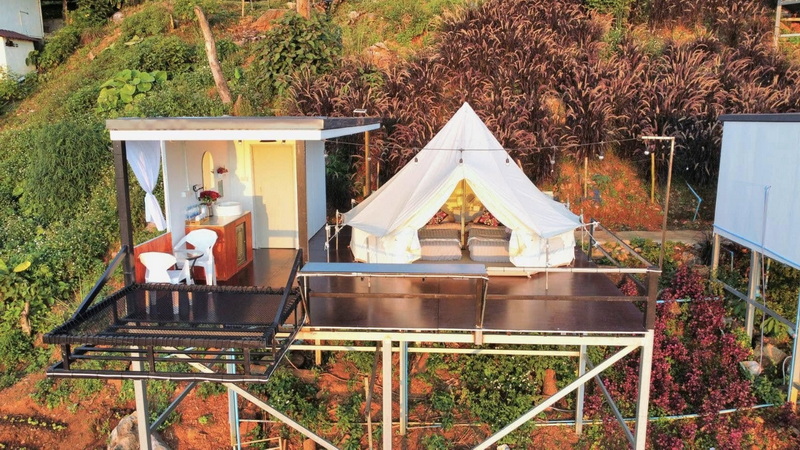
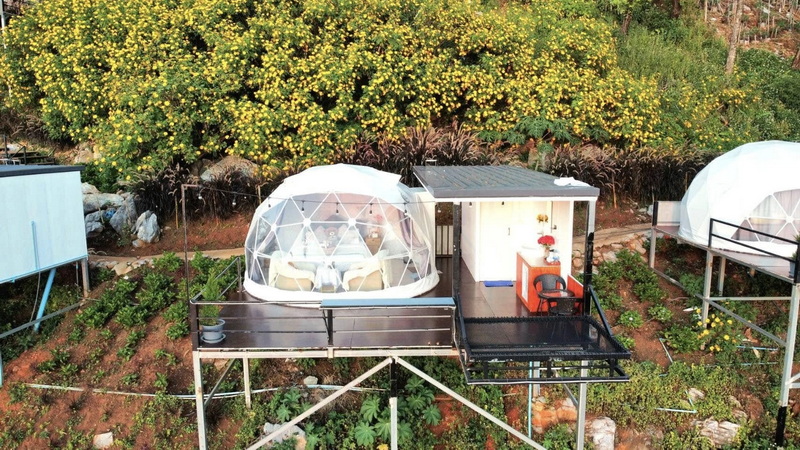
Accommodation around Phu Chi Fa caters to different travel styles, primarily divided into two options. The first option is staying in resorts or homestays scattered throughout Ban Rom Fa Thai and Ban Rom Fa Thong. These range from budget-friendly rooms to comfortable lodges equipped with essential amenities like water heaters, which are crucial during the freezing winter. Staying in the village offers easy access to food and early morning transport. The second option is camping, which is perfect for those wanting to sleep close to nature. The national park visitor center provides a designated camping ground with parking and restrooms, while private campsites along the slopes offer incredible views right from your tent.
🚗How to get there
The first way to go is keep going along the road Chiang Rai-Toeng and Toeng-Ban Yee, until you find your way to the Highway No.1155. At the highway, just continue straight for about 42 kilometres. Then you will reach Phu Chi Fa.
The second way is to take the Highway 1021(Toeng-Chiangkam-Ban Huag). By using this route, you need to look for a junction that is located before Chiangkam. Turn right at the junction and continue straight for 30 kilometres. Finally, you will arrive at the national park.
When you arrive at Phu Chi Fa, you have to park your car in a determined parkling lot, then walk all the way up to the national park area.
You can also grab some bus at Chiang Rai Old Transport Station instead, in case you don’t have a car. Find any one that transfers you from Toeng County to Phu Chi Fa.
A van will also works, but only during winter. You can also take a van at Chiang Rai Transport Station, from 7:00-13:00.
🛻 Local Shuttle Services: Safety Regulations for Mountain Ascents
A crucial piece of information for all visitors is the traffic regulation during the peak winter season. To prevent severe traffic jams and accidents on the narrow, steep final stretch, private cars are strictly prohibited from driving up to the Phu Chi Fa trailhead. Instead, visitors must park at the designated lots in the villages and hire a local pickup truck (songthaew) operated by the community enterprise. These local drivers are highly skilled in navigating the terrain. Services start as early as 4:00 AM to ensure visitors catch the sunrise. The thrilling, breezy ride covers about 1 to 2 kilometers before dropping you off for the final hike.
🎟️ Entrance Fees and Local Contributions
Currently, there is no official national park entrance fee for Thai tourists visiting Phu Chi Fa (though it is always wise to double-check recent regulations before traveling). However, there are small costs associated with transportation and community services. The local shuttle ride costs approximately 30 to 60 THB per person per trip, or you can charter a whole vehicle for 300 to 500 THB. Private parking lots in the village charge about 40 to 50 THB per car. These minor expenses not only guarantee your safety and convenience but also serve as vital support for the local economy, helping the community thrive sustainably alongside tourism.
Nearby Places
- Doi Pha Tang
Only about 22 kilometres away from Phu Chi Fa, this is also a kind of national park and mountain area. The scenery there is absolutely fantastic. The area is about 1,635 metres higher than the sea level and inhabited by some ethnic groups like Chin Haw people, Hhmong people. Go there and learn about their lifestyles and cultures.
- Doi Pha Mon Agricultural Centre
Just about 24 minuetes of travel, you will arrive at this interesting tourist attraction. Many species of cold weather flowers are planted there. You should go there during winter, as these flowers will be extremely beautiful. Just go around and take a lot of their photos. Or, you can spend some nights also, if you want to. There are some shelters available, but there aren’t any restaurants.





Leave A Comment